

A Letter from Captain Robert Walton to Joseph Smith, Care of John Taylor
A Latter-day Saint twist on the spiritual concerns behind a beloved classic

This piece is published in the original Spanish, as well as in this English translation by Ryan Fairchild and DA Cooper.
Loughbrickland, Ireland
August 2, 1840
Dear Brother Joseph,
Following your wise instruction to us messengers not to waste resources like paper and ink on greetings and excessive formalities, I wish you the blessings of Almighty God and inform you that, after experiencing the rejection and indifference of many, the Lord has touched the hearts of some men among those who heard our sermons in Belfast and has received into His people a blessed man through baptism by immersion, which took place in the tranquility of Brickland Lake, in a beautiful little village of that name. That man is Brother Thomas Tate, about whom I will give details in a forthcoming letter.
For now, I feel compelled to present a peculiar matter for your special consideration, given the strangeness of the case. Just after I had officiated at the sacred ceremony of the baptism of our now Brother Tate, a young woman approached me, distinguished by her elegant manners and propriety. She told me her name was Maggie Saville, that her great-uncle had heard my sermon in Belfast and had sent her to ask me to grant him a conversation, even if only for a moment. Her great-uncle had charged her with informing me that for many years he had been tormented by certain very specific questions and that upon hearing my words in that sermon he knew with certainty that he should seek me out to find the answers he had so long awaited.
I asked the young woman where her great-uncle lived, ready to attend to his need, and she told me that he was in this very town, awaiting me in an inn. And so I went to the inn and up to his room where his kind niece served us tea and looked after him, for although he was a tall and strong man, one could also see the weariness of a long life full of labor, and in his countenance the depth of one who has contemplated the hiddenmost corners of the soul.
When he saw me, the man seemed somewhat agitated and nervous. He spoke to me in a deep, hoarse voice, but not aggressively. He told me his name was Robert Walton, that he was a retired sea captain, and that he urgently needed to find answers to certain questions that tormented him and caused him indescribable suffering.
Brother Joseph, the things this man told me he saw and heard surpass all understanding of what we consider sin and the limits of what it means to be godforsaken and condemned. Only a transgression that the ancient Greeks called ὕβρις1 could capture the gravity of the things he related to me, if they really happened as he says, and I fear that they did. Therefore, I told him that I felt incapable of posing his questions properly and that it would be much better if he wrote to you himself, and that, God willing, you would answer him.
The man then signaled to young Maggie, and she took out of her travel bag the packet of handwritten pages that I am sending you along with this letter.
Having been granted the time and the sacred calling with which God has called me, I beg you to excuse me and please consider reading this letter to answer the questions that torment the soul of this poor man, who, at over eighty years of age, says he refuses to die without first having peace regarding the matter.
Yours in the brotherhood of the Lord,
John Taylor, Elder of the Church of God
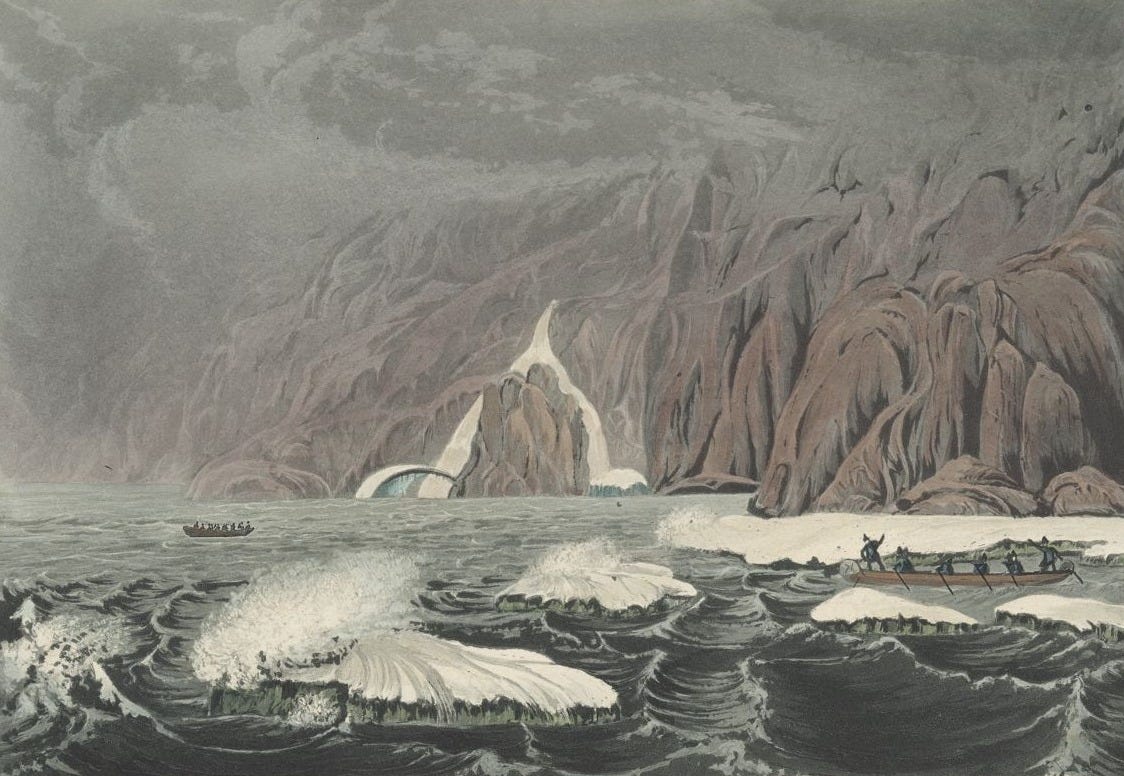
Belfast, Ireland
July 29, 1840
To the Honorable Prophet Joseph Smith:
My name is Captain Robert Walton. My upbringing was religious, like most, but I abandoned the faith when I discovered Science and saw how it could be used to achieve things previously inconceivable, take us to unimaginable places, and free us from bondage. During my training as a sailor, in addition to fulfilling the demanding duties of the profession, I read books on cartography, astronomy, and botany, and I became obsessed with Aristotle and his commentators.

 | A guest post by
|