

Martin’s Diabolus Ex Machina: A Hobbit In Westeros
A review of A Knight of the Seven Kingdoms

This essay contains spoilers for A Knight of the Seven Kingdoms.
I was lured into A Knight of the Seven Kingdoms by the promise of a JRR Tolkien protagonist in a George RR Martin world. The show delivers on both sides of that promise.
The main character of A Knight of the Seven Kingdoms is Dunk, later Sir Duncan the Tall, who can best be described as a jumbo-sized Hobbit. He is earnest, innocent, charmingly dull-witted, and above all decent. Aside from being bigger than anyone else, he’s not a particularly good fighter. His victories owe more to Rocky Balboa-style fortitude rather than to martial prowess.
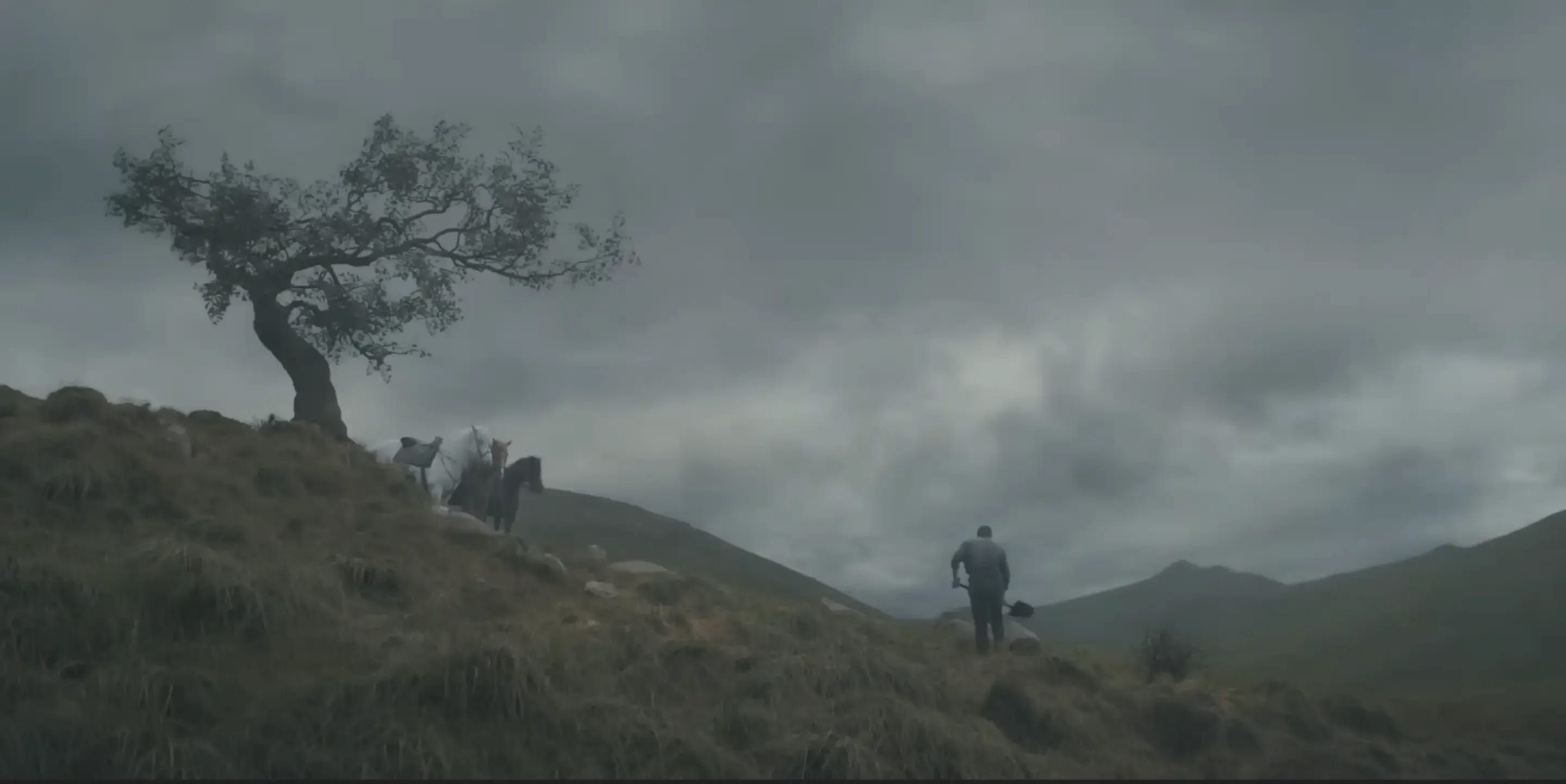
In the very first scene, we meet Dunk as he’s digging a shallow grave for his master, Arlan of Pennytree. Dunk carries Arlan’s body to the grave like a father carrying a child, lays his mentor in the dirt, then gives a plainspoken eulogy generously recounting that Arlan had only ever beaten Dunk without cause once. Dunk’s monologue is spliced with flashbacks of Arlan hitting and slapping Dunk as a child, cementing the fact that Dunk’s goodness is his own, not something he inherited from Arlan, and that his positive worldview stems not from naivete but from charity. He has experienced pain and hardship from others, but he sees the good in people regardless.
Dunk’s good nature is additionally revealed in the contrast between his repeated threats to beat Egg, his insouciant young squire, and the fact that he never once raises his hand to do so. Dunk idolizes his dead mentor, but he is already a better man than Arlan was. Dunk is a lonely, nearly seven-foot-tall Samwise Gamgee. (Peter Claffey, who plays Dunk, is 6’5” in real life, but Dunk is described as being just under 7’ in the novellas.)
Dunk heads to a nearby tournament to seek his fortune. Victory means survival. Defeat means death, metaphorical or literal. Losers forfeit their armor and mounts and, as another knight tells Dunk, “a knight without a horse is no knight at all.”
But the real challenge Dunk faces isn’t winning the tournament, it’s getting into the tournament at all. Although any knight, even a hedge knight, can make another knight, Dunk has no evidence that Ser Arlan knighted him. What’s more, not one of the lords at the tournament remembers Arlan, despite Arlan having served many of them.
That is, no one remembers Ser Arlan until Dunk meets Prince Baelor “Breakspear” Targaryen, the Hand of the King and Heir to the Iron Throne. Baelor listens courteously to Dunk, remembers Ser Arlan of Pennytree from a joust many years before, acknowledges that Arlan was an honorable knight, and therefore personally vouches for Dunk, allowing him to enter the tournament.
Diabolus Ex Machina
After this display of basic goodness, Baelor is a dead man walking. Anyone familiar with George RR Martin’s work knows this. After all, Dunk may be a character straight out of Tolkien, but he is in Martin’s world. There may be room in Westeros for decency and goodness, but only if it is strictly quarantined. The weak and the ineffectual are permitted to be virtuous. The powerful are not. The mutual exclusivity of goodness and influence is the inviolable bedrock of Martin’s worldbuilding.

 | A guest post by
|