

Harmony and the Problem of Evil
Examining theodicy in Brandon Sanderson's Wax & Wayne series

This essay contains spoilers for the first and second Mistborn series.
Fantasy is not frivolous. While the genre has often been reduced to formula, fantasy is a means by which authors explore profound questions of the soul. Weronika Łaszkiewicz calls the genre “a modern heir to that mythological tradition in which the fantastic [is] used to question the nature of the material and the spiritual world.”1
This modern inheritance is prominently exhibited by Latter-day Saint authors, who often weave religious ideas and themes into their stories. As one example, Latter-day Saint conceptions of humans’ ability to become gods appear in as diverse works as Orson Scott Card’s Xenocide, Stephenie Meyer’s Twilight, and Charlie Holmberg’s Star Mother. The prominence of these stories and their religious content in the public imagination is significant for two reasons. First, while Latter-day Saints form a very small minority in the United States, authors from this tradition (such as those named above) are some of the most popular in the science fiction and fantasy genres. These authors have routinely made bestseller lists and, in the case of Brandon Sanderson, have had a major impact on the structure of the publishing industry as a whole.
The second reason is more subtle: Many Latter-day Saints are uncomfortable with the idea of everyday members engaging in theology. Theology is defined as “the study of religious faith, practice, and experience.”2 The topics of theology are generally seen by members of The Church of Jesus Christ of Latter-day Saints as the purview of the Church’s leaders, particularly the President of the Church, the First Presidency, and the Quorum of the Twelve Apostles. When members outside of these leadership positions study and write about these topics, it is often seen as an intrusion on the exclusive privilege of those leaders.
This attitude is revealed by Dave Banack’s 2013 article “What Mormon Theology Looks Like,” where he writes, “the admission that LDS doctrine is firmly in the hands of the Church as an institution and that theology is a largely separate activity makes Mormon theology less threatening.”3 Banack (and Adam S. Miller, whose book is the topic of Banack’s article) makes a distinction between doctrine (the official teachings of the Church) and theology as defined above to delineate the territory where everyday members may operate. In this framework, a Latter-day Saint has no ability to change the official teachings while still being able to engage in theology. Such a distinction is necessary because of Church members’ deep respect for prophetic/institutional authority and the widespread assumption that said authority has exclusive claim to theological matters.
Despite this hesitance among some, the literature of the Latter-day Saints is full of theology. Fantasy provides a context in which Latter-day Saints can engage in discussions that might otherwise be seen as suspect or subversive. Fantasy worlds, whether secondary or not, provide a sandbox where authors can reason about God, faith, and religion without direct application to our own reality. Sometimes, these theological experiments lead to different conclusions than those taught by the institutional church.
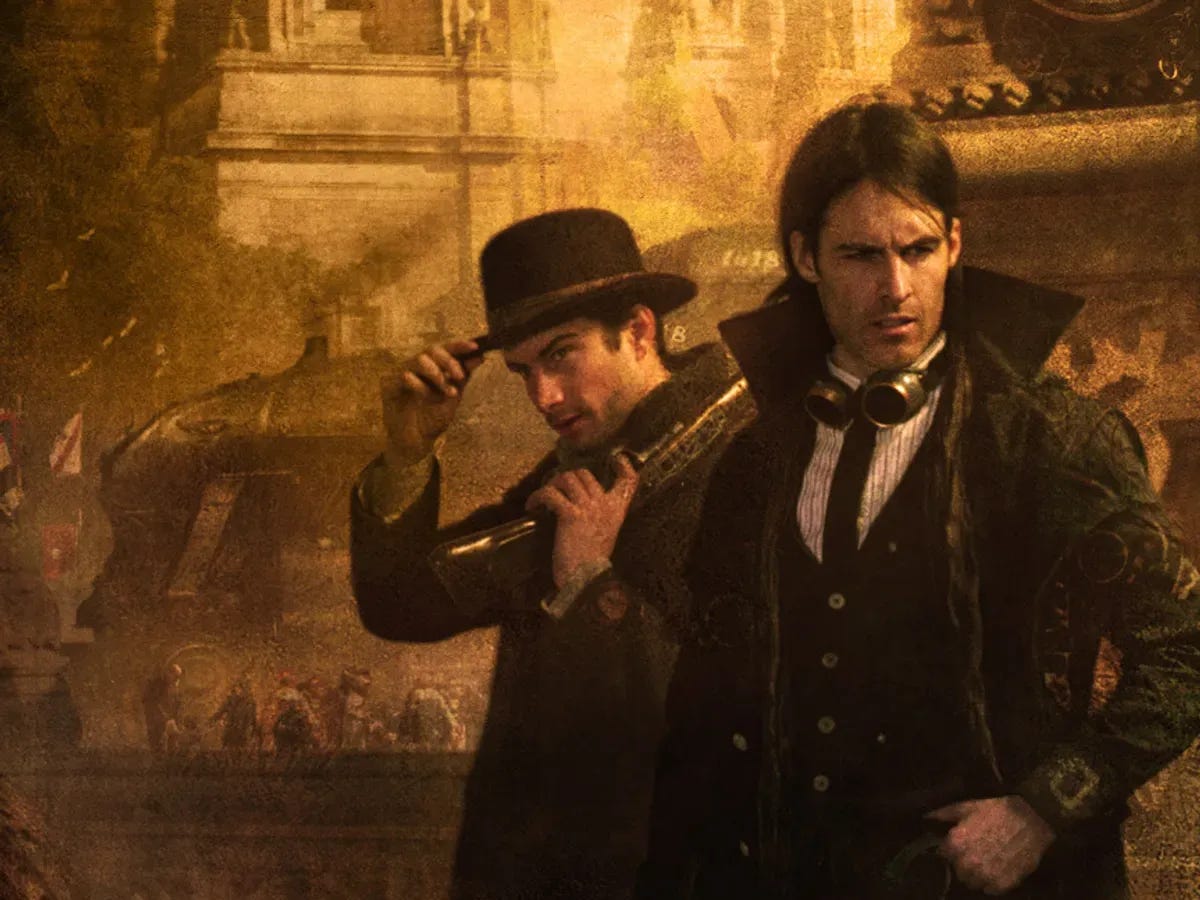
As an initial example of this thesis, I examine the theological content of Brandon Sanderson’s Wax & Wayne series. Weronika Łaskiewicz reviewed the series as a whole in her book Fantasy Literature and Christianity. In contrast, I focus on one theological theme in the series: the problem of evil. Sanderson addresses this perennial Christian problem in a series of dialogues between the main character of the series, Wax, and the god called Harmony. These dialogues not only incorporate elements of Latter-day Saint solutions to the problem of evil, but also move beyond them to engage in meaningful dialogue with the broader religious community.

 | A guest post by
|